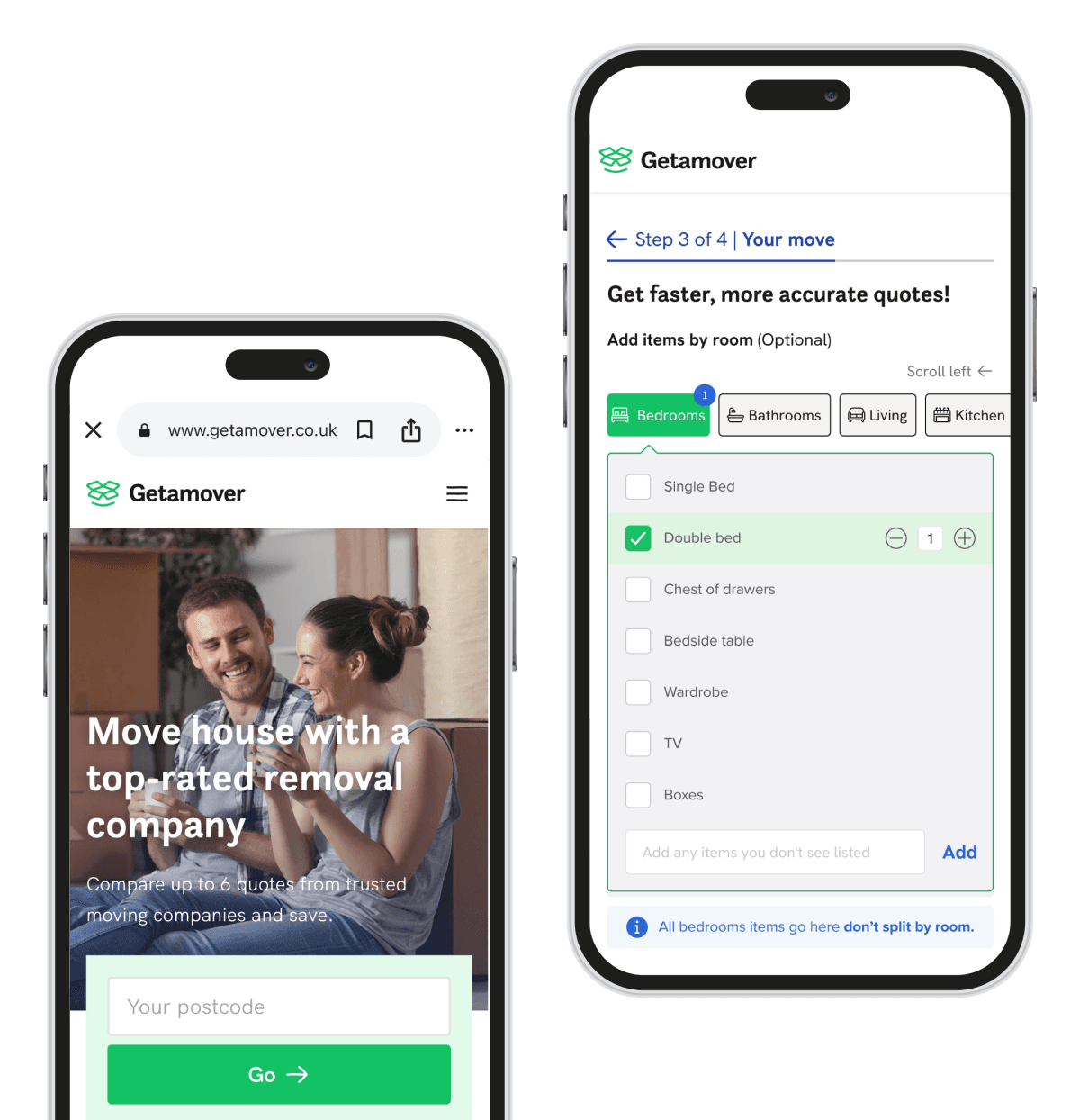
Getamover is a marketplace for moving companies in 23 countries. The business needed to shift from fixed to dynamic pricing, but moving companies didn't trust our volume estimates, blocking the transition.
Homeowners
Focus point
Homeowners
Focus point
Moving companies
Focus point
Constraints_
Business:
• We couldn't hurt conversion rates.
• Any experiment had to include a fast pivot
option.
Engineering: Fixed 6-week timeframe to design, test, and iterate.
How do we ask for more information without driving homeowners away?
Approach_
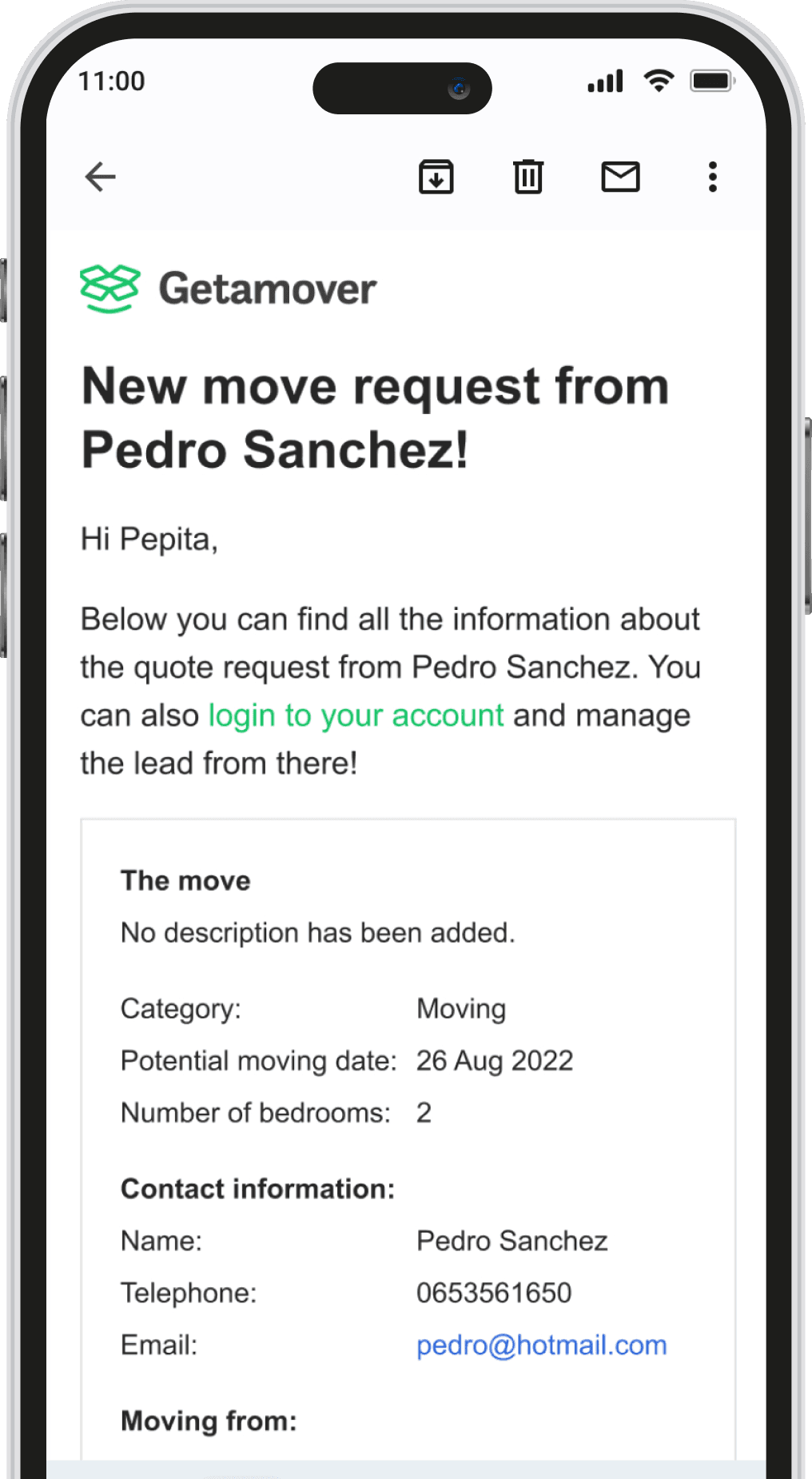
I interviewed moving companies to understand what information they actually needed. They required accurate room counts and item lists to calculate volume (m³), enabling them to price competitively and win on speed. I defined the research strategy with the head of product: five markets, ~100 participants per market, starting without incentives to measure natural responses.
I analyzed homeowner behavior through heatmaps, drop-off rates, and surveys. Homeowners said they felt overwhelmed by the questions and worried about data privacy, but would share more information if it meant faster results without having to talk to movers first.
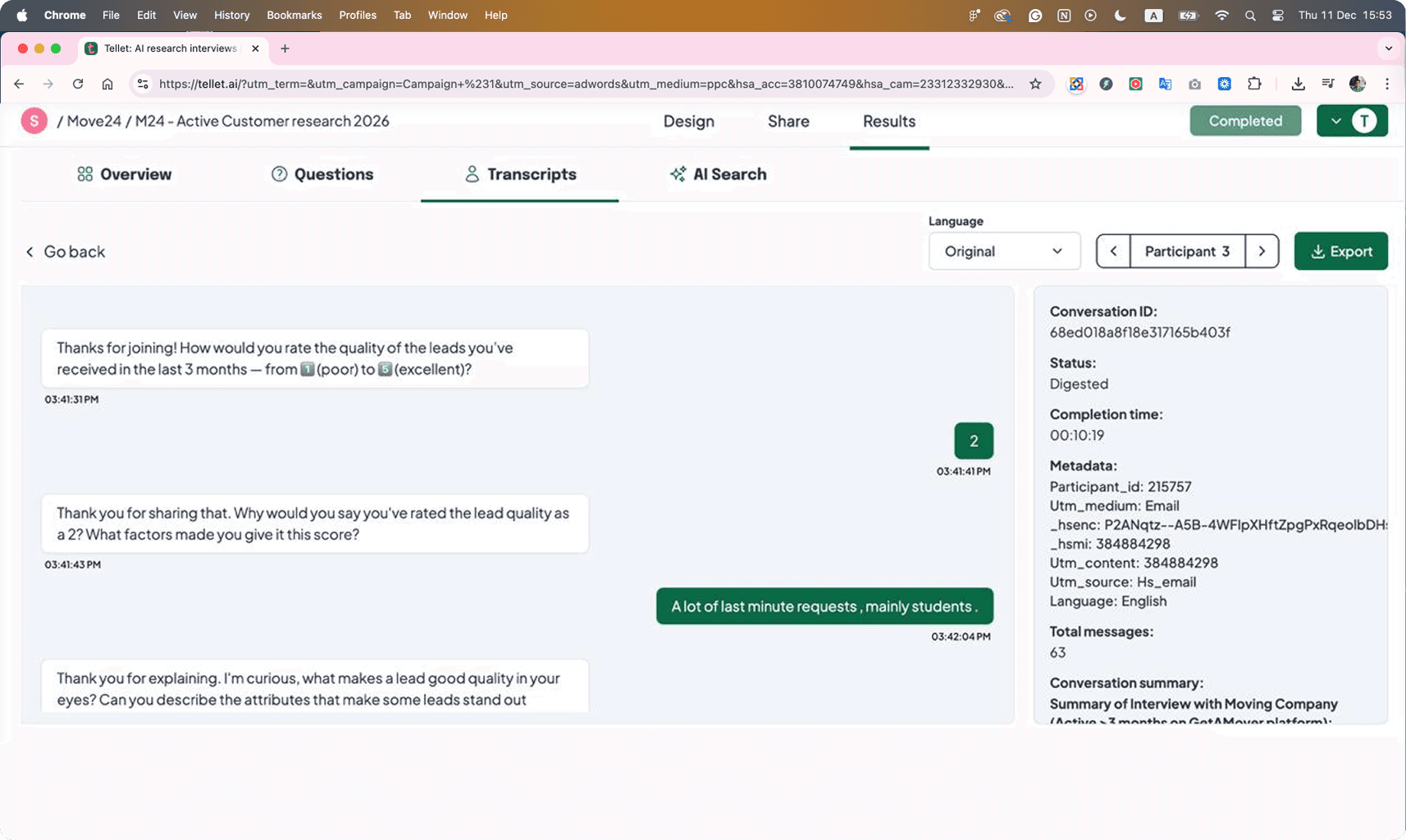
Tellet AI Research: Moving companies
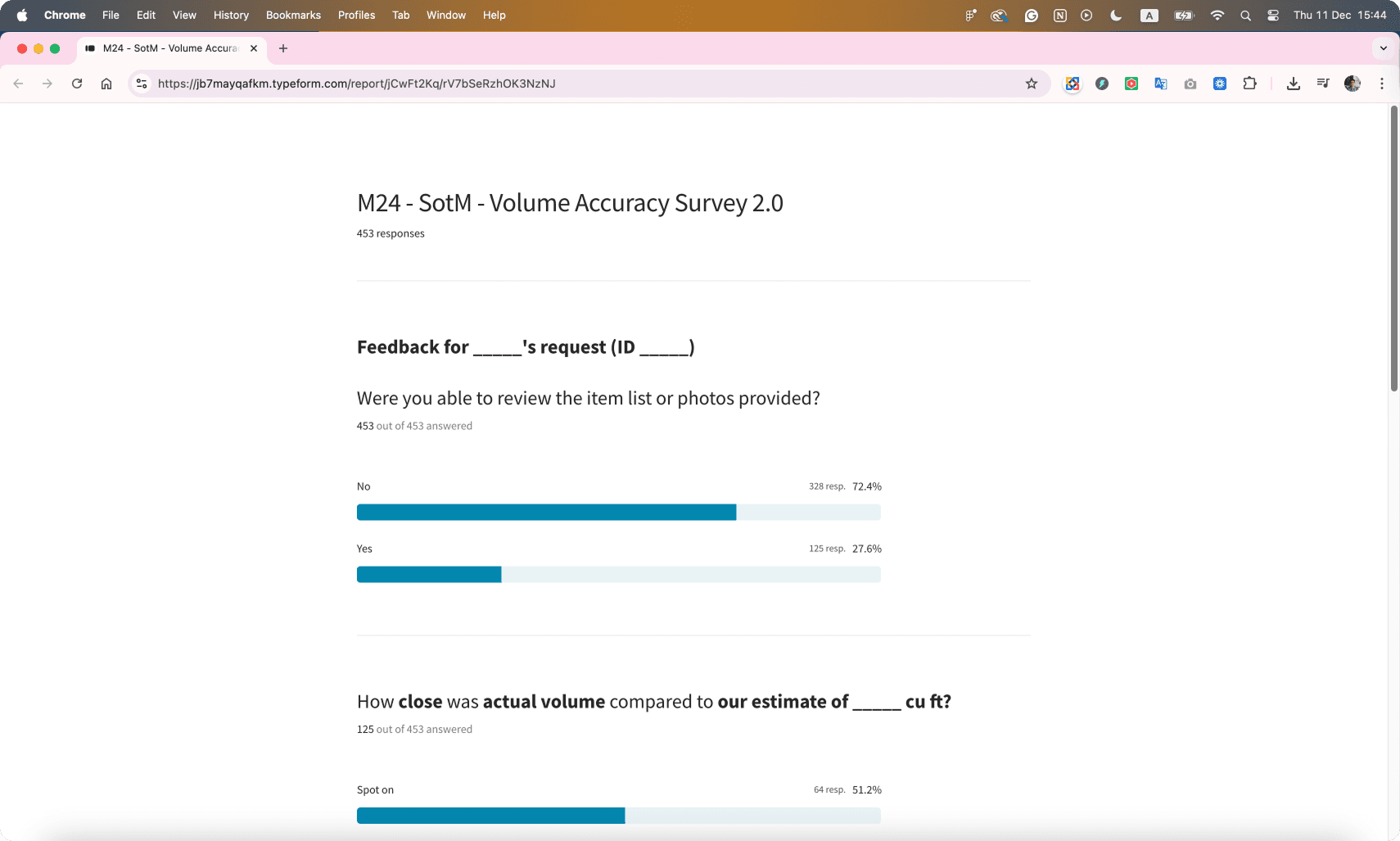
Typeform Survey: Homeowners
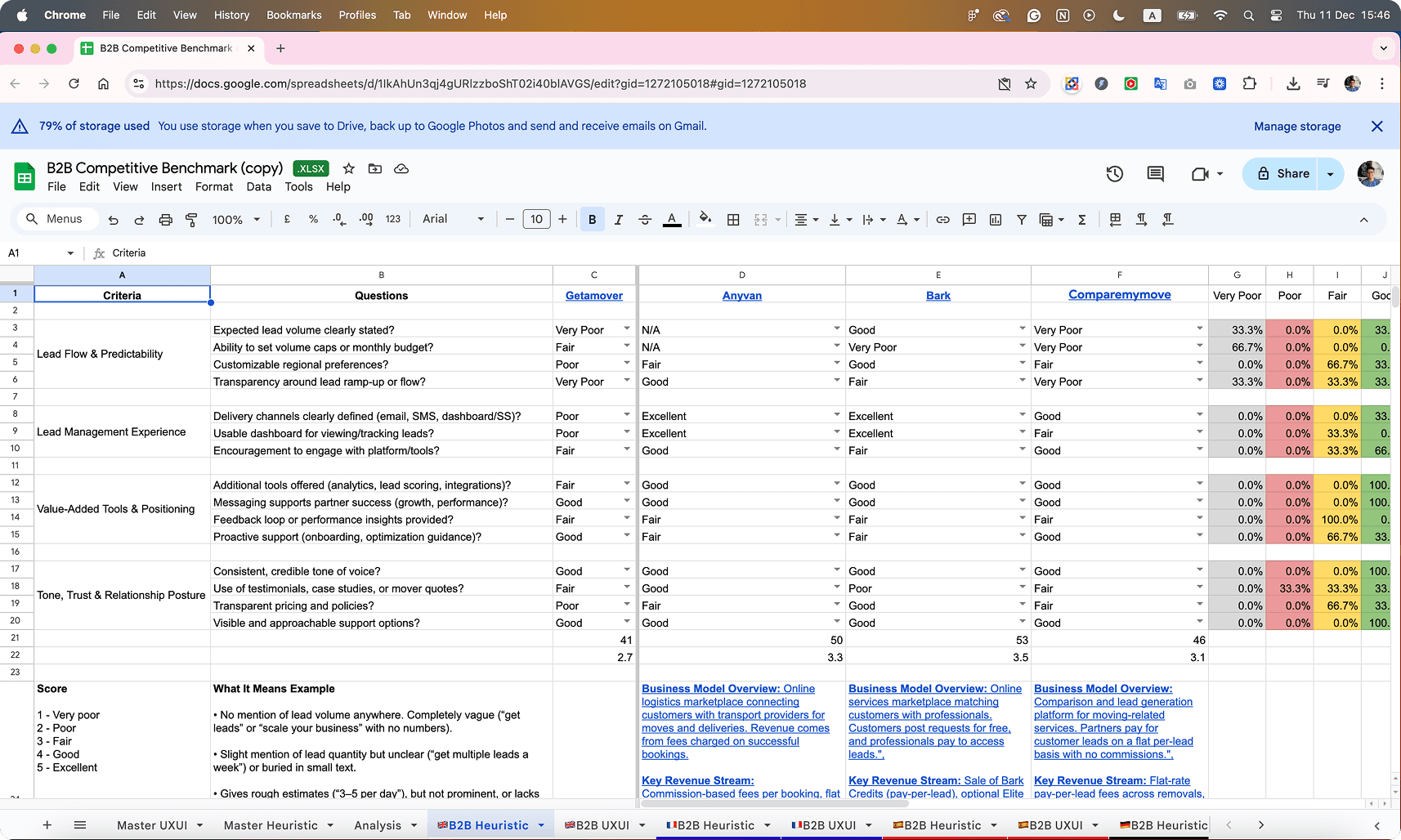
Competitors Analysis
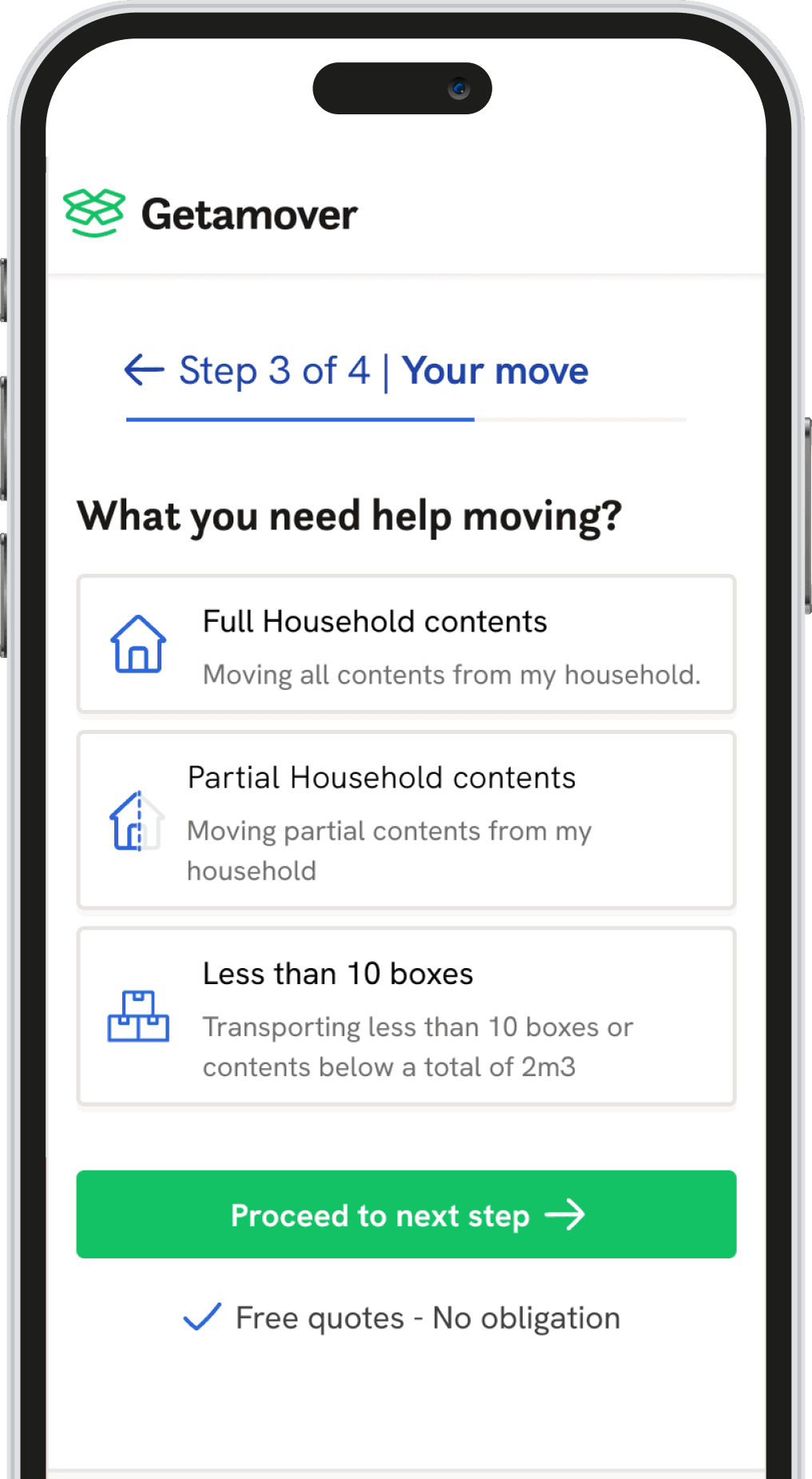
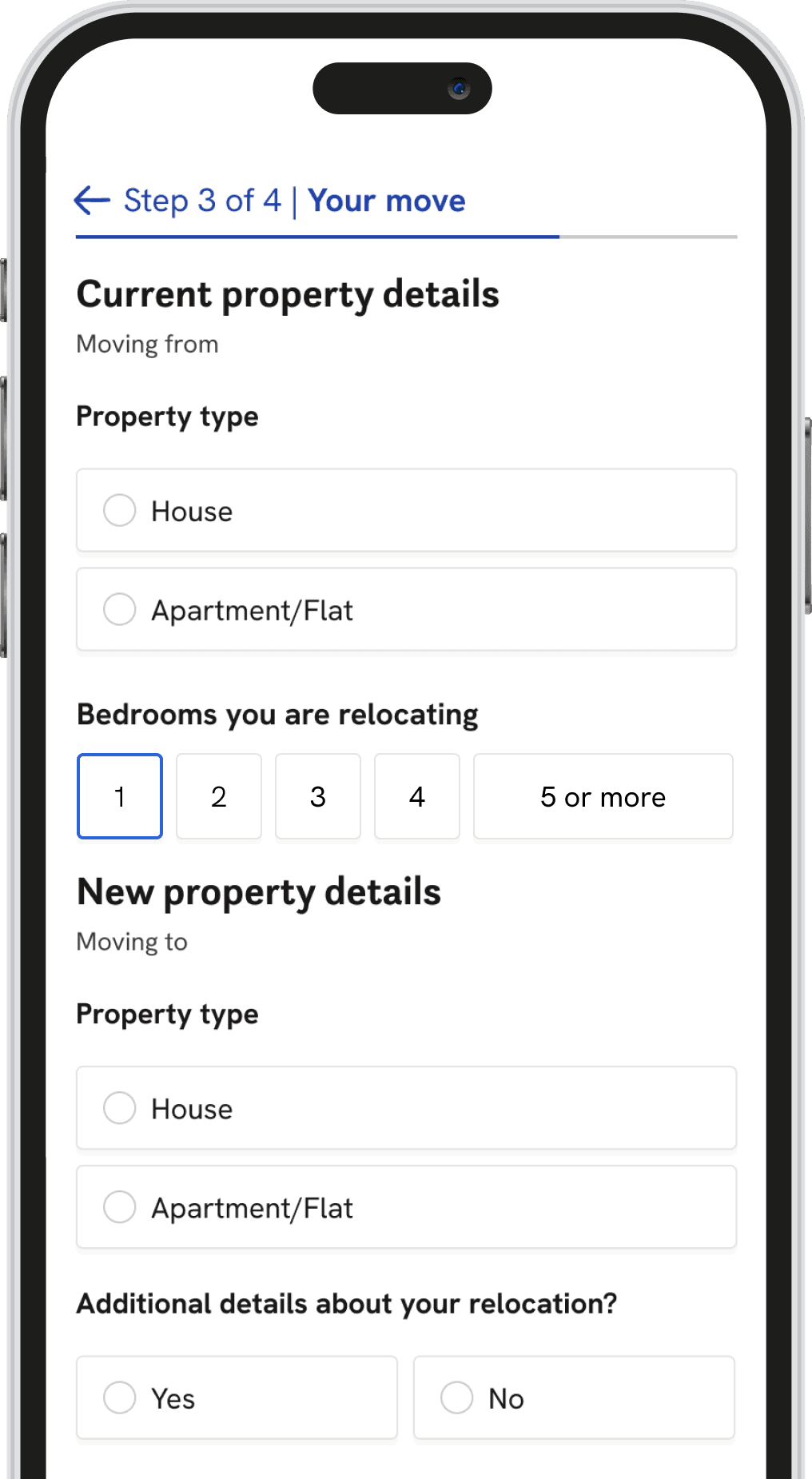
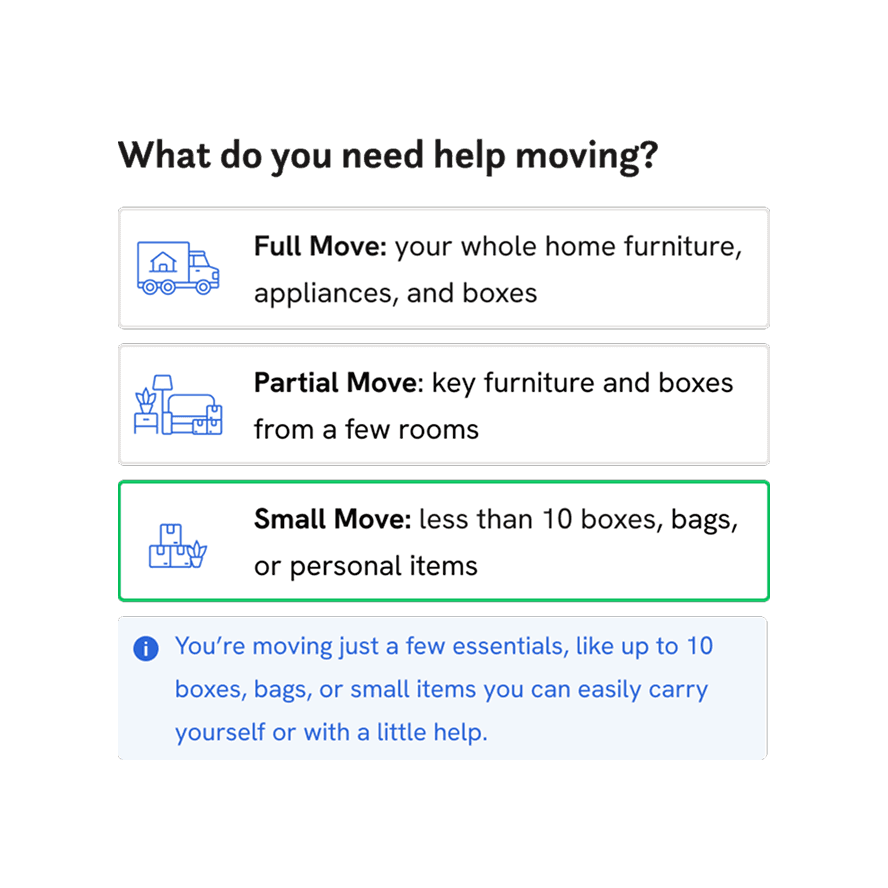
We ran an A/B/C test. Users selected move size (big, medium, small), then: Variant B asked for cubic meters, Variant C asked for room type. Small moves followed a different path, an open-text item list.
Control version
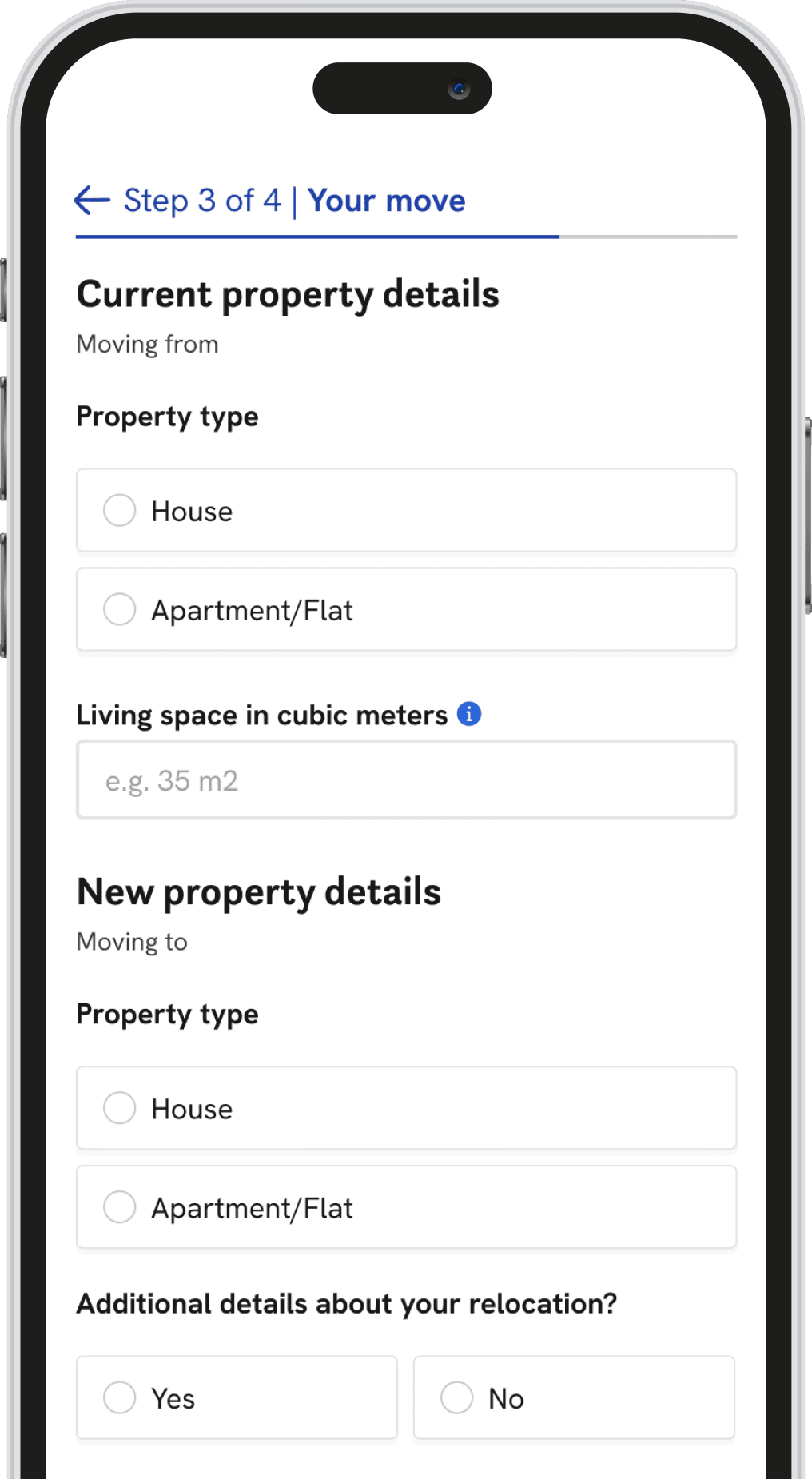
Variant B: Cubic meters
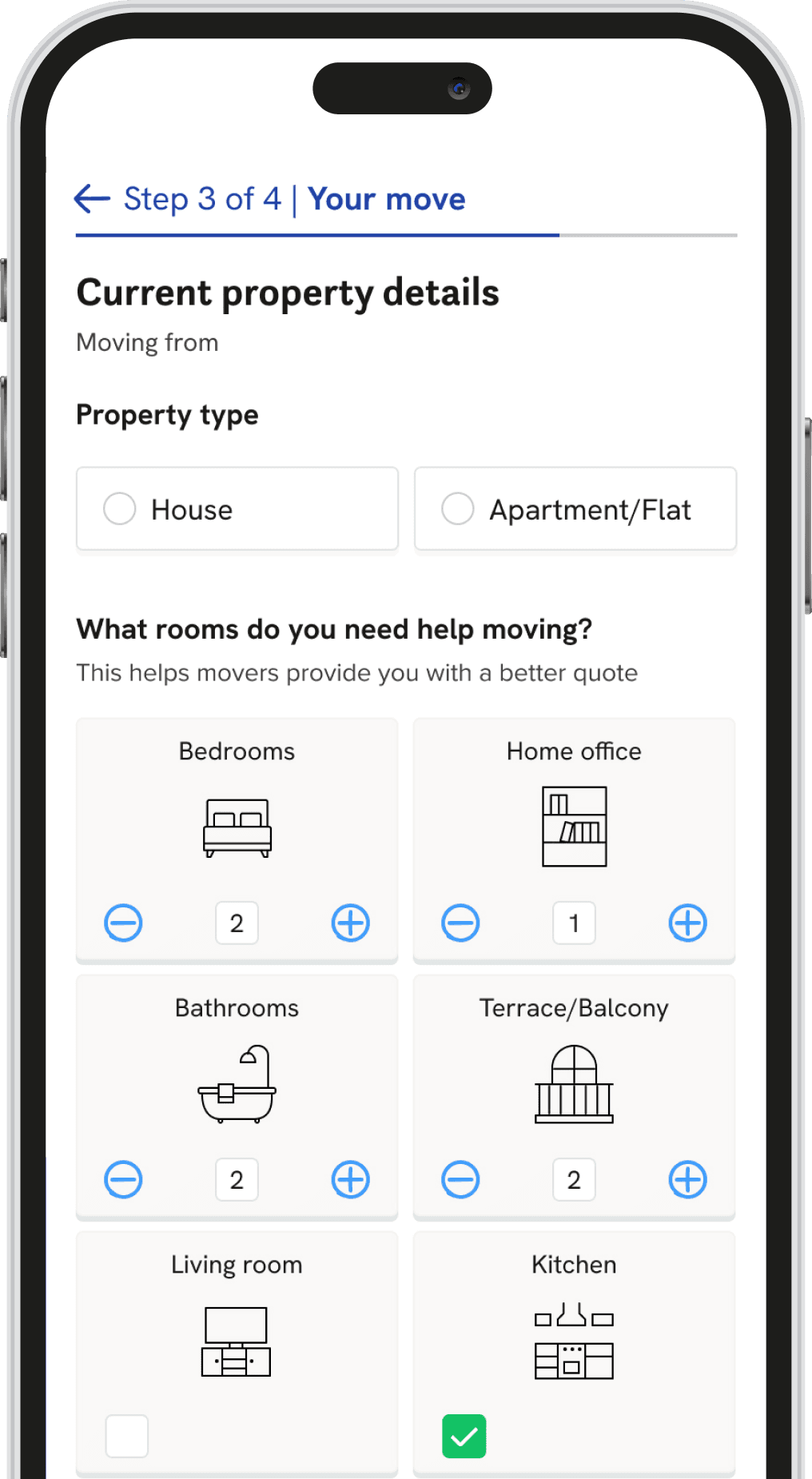
Variant C: By room type
What failed, and what we learned_
Neither variant reached 80% accuracy. Room size expectations varied by country; no universal model worked. But for small moves, 70% of users completed item lists accurately, providing movers with reliable data.
Insight_
Abstract measurements don't work. Concrete item lists do. I coordinated follow-ups with the CSM and BI lead to validate this finding and align on next steps.
Pivot_
Since conversion rates held steady, I proposed expanding the item list approach to all move sizes. I presented the failed experiment results to stakeholders, showing clearly why we missed the target and how we could course-correct:
•
• Movers confirmed item lists let them calculate value accurately
• We could build a reliable volume database across markets
• If conversions dropped, we could stop immediately
Homeowners' side
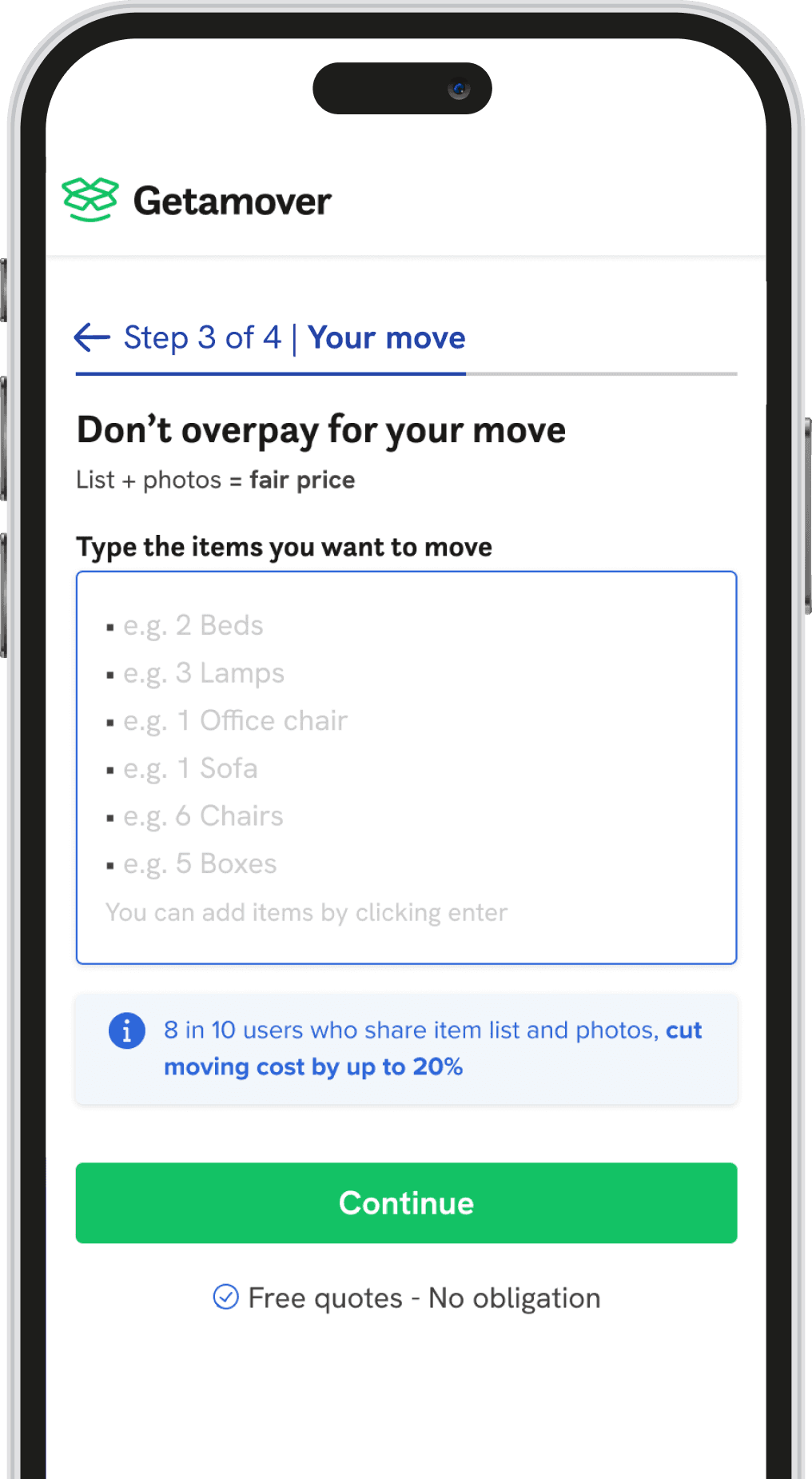
Item list / Variant A
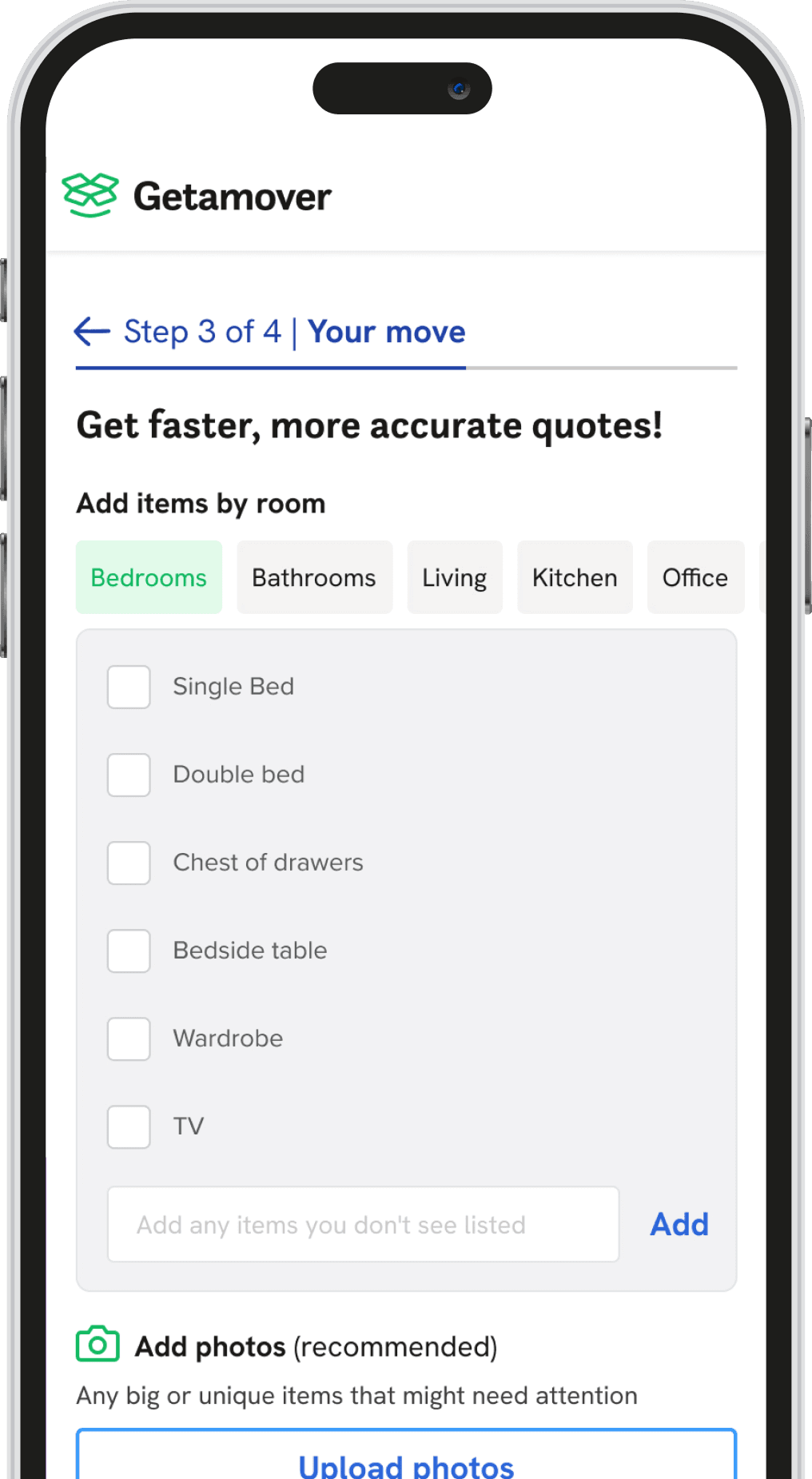
Item list / Variant B.1.0
Movers' side
Before
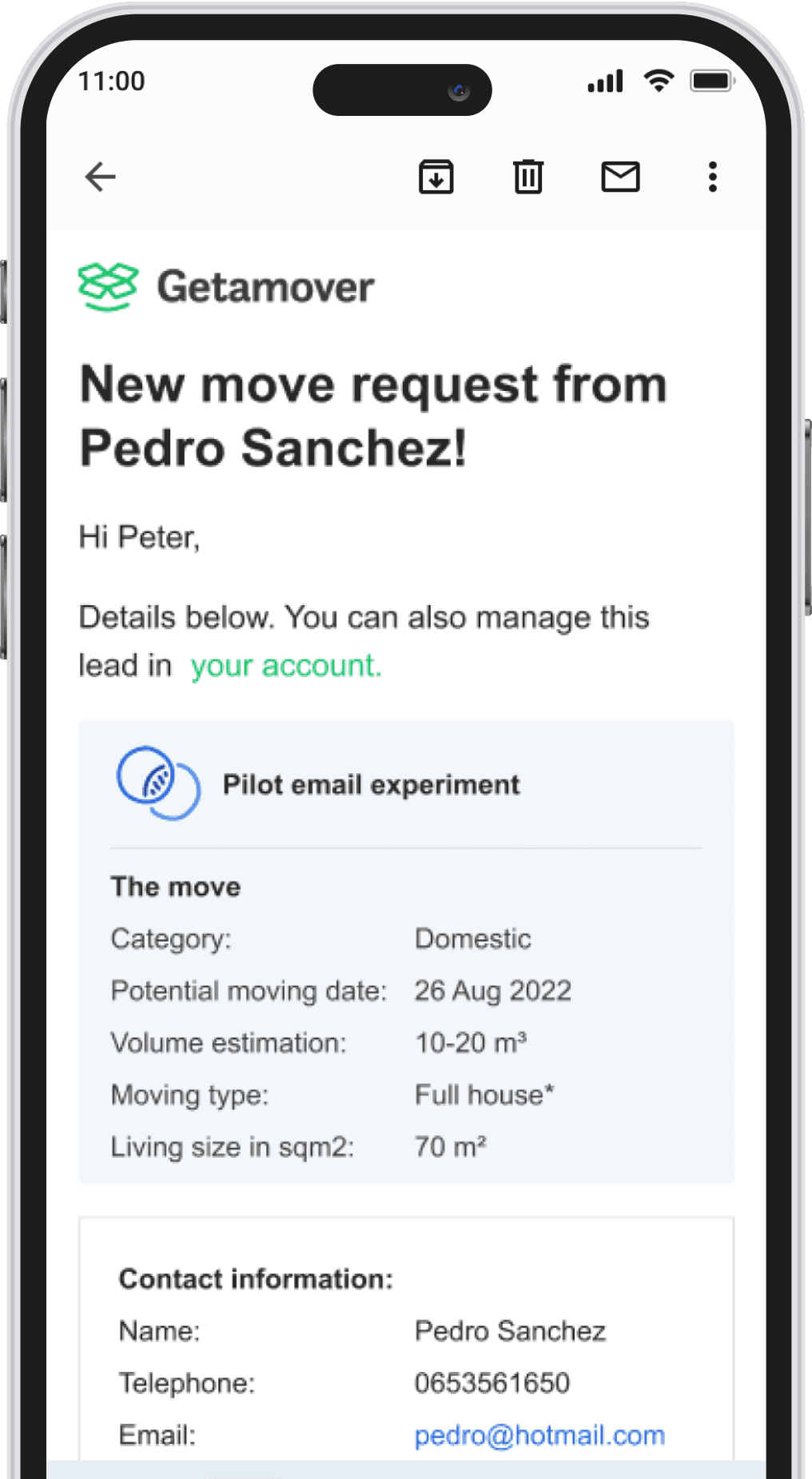
After
We ran a second A/B test. Users selected Varian A or Variant B, asked them for their item list, and a sub-section. For moving companies, we implemented a before-and-after solution.
Variant B 1.0
It didn't required more iterations
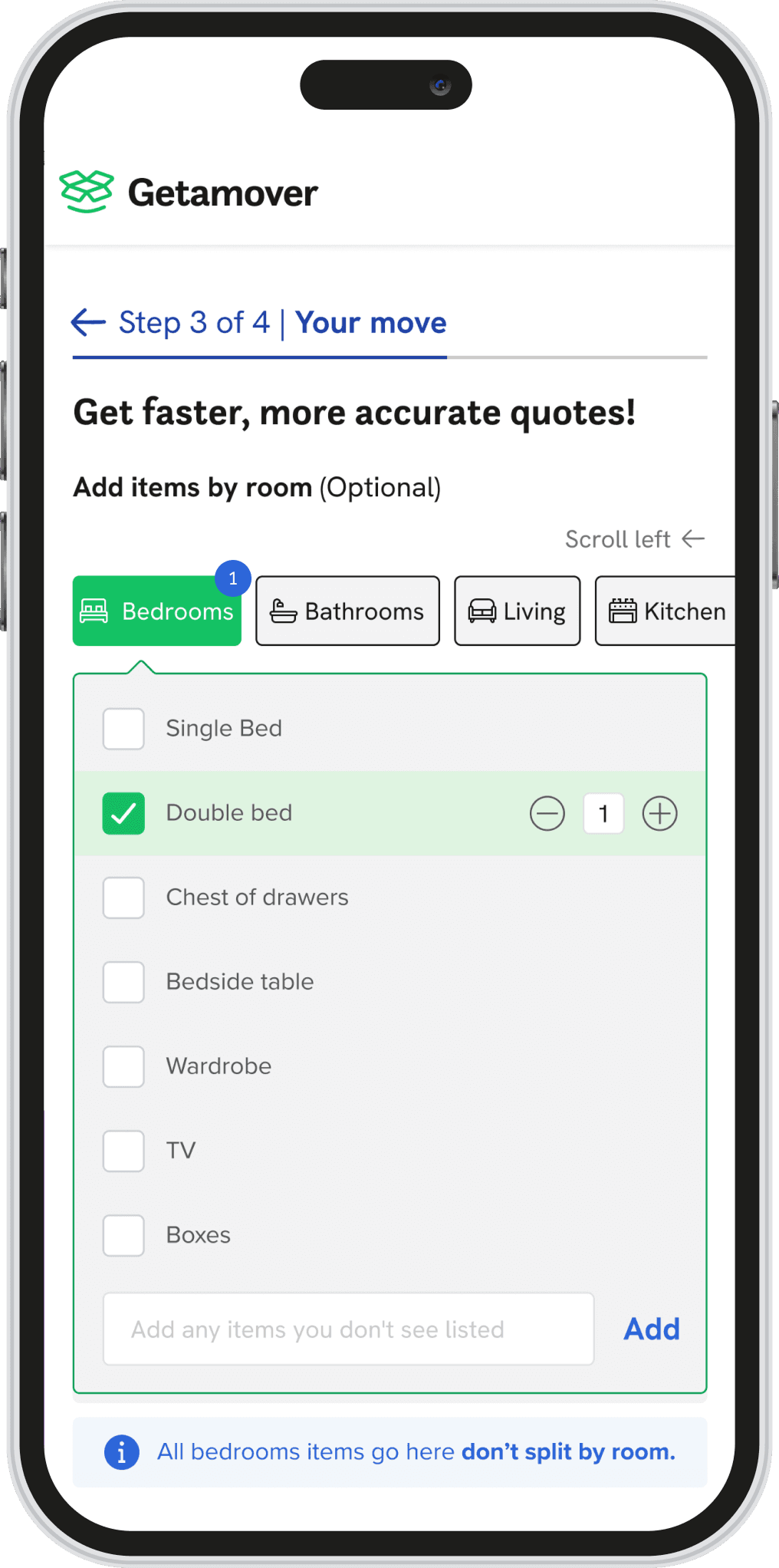
Variant B 2.0
Final iteration
Outcome_
The new approach met all success criteria:
89% of homeowners added item lists (target: 70%)
80%+ volume accuracy achieved (target: 80%)
70% of homeowners felt confident in their estimation
Takeaway_
By reframing volume estimation as trust-building rather than data collection, we transformed unreliable leads into actionable intelligence, unlocking the foundation for dynamic pricing.
Moving companies now receive leads with 80%+ volume accuracy, giving them confidence to bid faster and more competitively.